


Quick Summary
UPF 50 golf shirts block about 98% of UV radiation, so they protect skin without relying on sunscreen alone. Choose a shirt labeled UPF 50 or UPF 50+, then pick a sleeve length based on sun exposure, heat, and your course's dress code.
- A UPF 50 rating means roughly 1/50th of UV rays reach the skin, about 2% transmission.
- UPF protection does not need reapplying, provided the shirt is worn and cared for properly.
- Long sleeves extend UPF 50+ coverage down the arm, which matters most on midday, open-course rounds.
- Fabric construction matters more than sleeve length for comfort in heat and humidity.
- Wash in cold or warm water on a gentle cycle, and avoid fabric softener to keep protection intact.
Table of Contents
- What UPF 50 Means and How the Rating Works
- Choosing Women's Golf Shirts with Sun Protection
- Fabric, Breathability, and Staying Cool on the Course
- Long-Sleeve vs. Short-Sleeve: Picking Coverage for Course Conditions
- Fit, Stretch, and Comfort for a Full Golf Swing
- Quick-Dry Women's Golf Polos and Travel Versatility
- Caring for UPF Golf Shirts So They Keep Protecting You
- Choosing Your Next AnaClare Golf Top
- Frequently Asked Questions
What UPF 50 Means and How the Rating Works
Last Updated: November 1, 2026
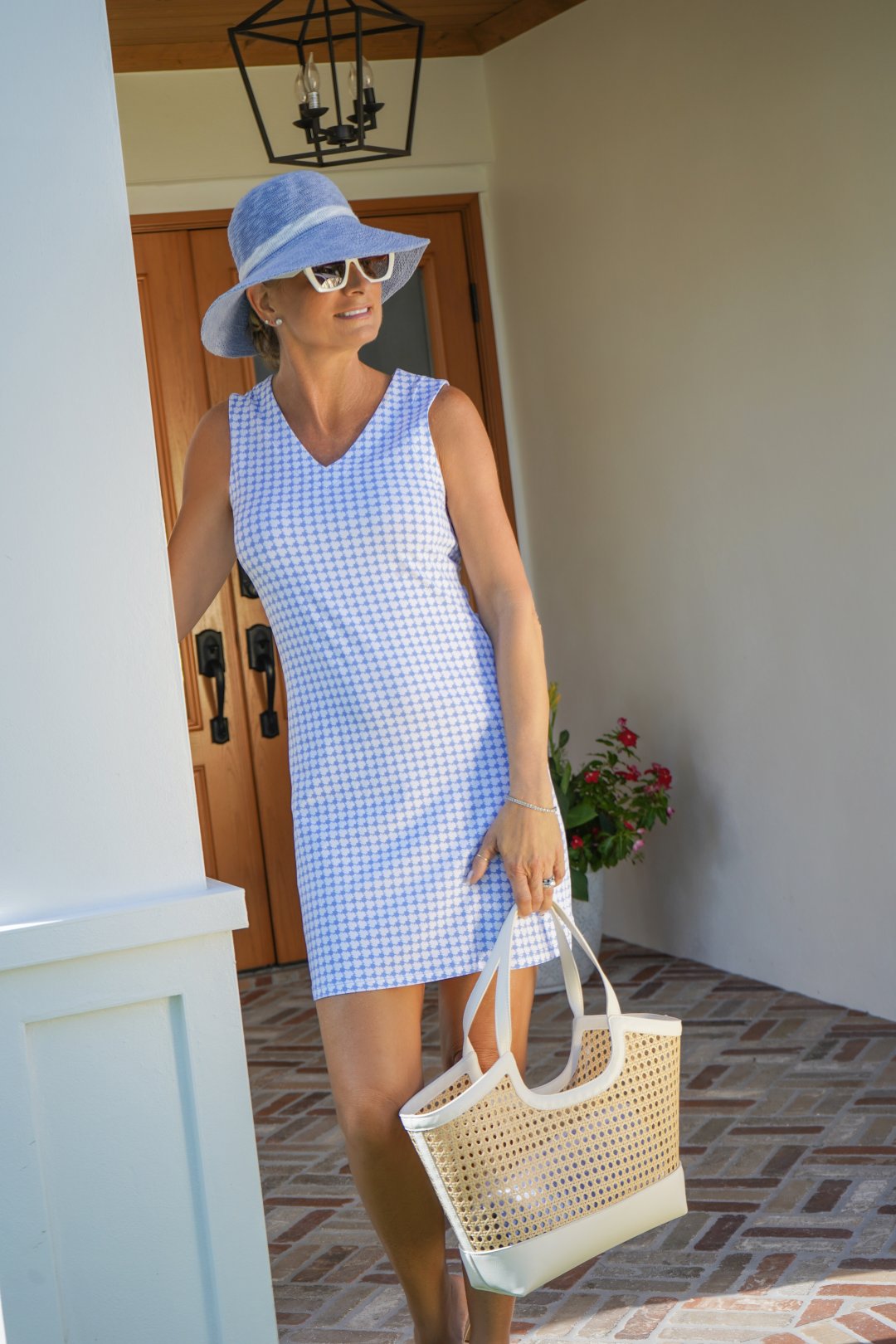
If you are shopping for comfortable UPF 50 golf shirts for women, the rating on the label is the first thing to understand. You can compare the AnaClare Active Short Sleeve Tops to see the styles that suit golf and sun coverage.
UPF is a measure of how much UV radiation a fabric lets through to the skin.
The rating is measured on the fabric itself. Protection can change with wear, so look for fabrics that retain their protection through washing, which is a point we return to in the care section below.
Unlike sunscreen, UPF coverage does not need to be reapplied, provided the shirt is worn and cared for properly.
Choosing Women's Golf Shirts with Sun Protection
The main decision is between a polo, a sleeveless top, and a longer-sleeved option. Each delivers the same UPF rating, but the amount of skin covered changes how much comfort and mobility you feel over 18 holes.
Our Mer Short Sleeve Polo, available in white, pink, black, navy, and dazzling blue at $39.99, is built for a classic collared look with UPF50 protection. It is designed to move from the course to the clubhouse.
When you compare options, check these details:
- UPF rating: Confirm the shirt is labeled UPF 50 or UPF 50+.
- Collar and placket: Polos suit most dress codes, while open necklines may not.
- Sleeve length: Short sleeves keep you cooler, longer sleeves add arm coverage.
Fabric, Breathability, and Staying Cool on the Course
Fabric construction has the biggest effect on how comfortable a shirt feels in heat, and it is also where the UPF rating and breathability can pull against each other. Understanding that trade-off is the difference between a shirt that protects you and one you actually want to wear for 18 holes.
How UPF and breathability interact
UPF protection comes from how tightly the fabric blocks UV radiation. Three factors drive it: the tightness of the weave, the type of fiber, and any added UV-blocking treatment. A tighter weave blocks more UV, but it can also reduce airflow if the yarn and knit structure are not engineered to compensate.
What to look for in the fabric description
When you compare shirts, read the fabric details for these signals:
- Fiber content: Polyester and nylon blends are common in performance golf shirts because they can be engineered for moisture wicking and quick drying. Spandex or elastane adds stretch for swing mobility.
- Knit structure: Look for language like "fine-gauge," "jacquard," or "mesh panels" that indicates airflow is designed in, not just claimed.
- Moisture-wicking and quick-dry claims: These should appear alongside the UPF rating, not instead of it. A shirt that wicks sweat but blocks less UV is not a true sun-protection shirt.
Breathability testing you can do yourself
You do not need a lab to get a feel for airflow. Hold the fabric up to a light source: if you can see pinpoints of light through the weave, air will move through it, but so may some UV. A fabric that is completely opaque blocks more UV but may feel warmer. The goal is a balance, and the label's UPF rating tells you the protection side of that equation.
Why this matters for comfort over 18 holes
A shirt that traps heat forces your body to work harder to cool itself, which shows up as fatigue on the back nine. Moisture-wicking fibers pull sweat away from the skin so it can evaporate, and quick-dry fabrics recover faster after a rain shower or a hard walk between holes.
Our Mer Short Sleeve Polo offers UPF50 protection for the course.
Long-Sleeve vs. Short-Sleeve: Picking Coverage for Course Conditions
Most buying guides treat sleeve length as a style preference. In practice, it is a performance decision shaped by sun exposure, heat, dress codes, and how you layer. This section gives you a framework for choosing based on the conditions you actually play in.
Match sleeve length to sun exposure
A short-sleeve polo leaves your forearms and lower arms exposed for the entire round. On an open, treeless layout at midday, that is several hours of direct UV on skin that sunscreen often misses. Long sleeves extend UPF 50+ coverage down the arm, which matters most for:
- Midday tee times when the sun is highest
- Courses with wide fairways and little shade
- Players with a history of sun sensitivity or who take photosensitive medications
Short sleeves make more sense for early-morning or late-afternoon rounds, heavily treed courses, and players who run hot and prioritize airflow above all else.
Heat and humidity: when long sleeves still work
A common misconception is that long sleeves are always warmer. A lightweight, breathable long-sleeve UPF shirt can feel cooler than a short-sleeve cotton polo because it blocks direct sun from heating the skin and manages moisture. For a lighter alternative to covered options, see the Katie Solid Sleeveless Half Zip Top. The key is fabric weight and ventilation. If you play in high heat and humidity, look for a long-sleeve option described as lightweight or breathable, and check for mesh panels or a looser fit that lets air move.
Dress codes and collar requirements
Many golf courses require a collared shirt, and some private clubs have stricter policies. A collared polo, short or long sleeve, is the safest choice for meeting dress codes. Sleeveless tops and open necklines may be acceptable at some courses and not others, so check the course's dress code before you book. If you want a sleeveless option for hot days, confirm the policy first and consider keeping a lightweight collared layer in your bag.
Layering for changing conditions
If you play in several climates or tee off early, layering solves the sleeve-length dilemma. A short-sleeve UPF polo as your base layer works for most of the round, and a lightweight long-sleeve layer or a quarter-zip adds arm coverage for cooler mornings or open, sun-exposed stretches. Look for layers that are easy to remove and pack small, so you can adjust as the sun and temperature change.
A simple decision framework
- Hot, humid, shaded course, early tee time: short-sleeve polo.
- Hot, humid, open course, midday tee time: lightweight long-sleeve polo or short sleeve with a sun sleeve layer.
- Mild temperatures, variable sun: short-sleeve polo plus a packable long-sleeve layer.
If you play in several climates, pick a short-sleeve UPF top as your everyday option and add a lightweight layer for cooler mornings or open, sun-exposed rounds.
The sleeve choice comes down to sun exposure, heat, and dress code, so here is how the options compare.
| Sleeve choice | Best for | Key consideration |
|---|---|---|
| Short-sleeve polo | Early-morning or late-afternoon rounds, heavily treed courses | Leaves forearms exposed to direct UV |
| Lightweight long-sleeve polo | Midday tee times, open courses with little shade | Extends UPF 50+ coverage down the arm |
| Short sleeve plus packable layer | Variable sun and temperatures | Layer adds arm coverage when needed |
| Collared polo, either sleeve length | Strict dress codes | Safest choice for meeting course rules |
| Dense, non-breathable long sleeve | Not recommended in heat | Traps heat; fabric matters more than sleeve length |
Fit, Stretch, and Comfort for a Full Golf Swing
A golf shirt has to allow a full rotation without pulling at the shoulders or riding up at the waist. Stretch fabric helps, but fit matters just as much.
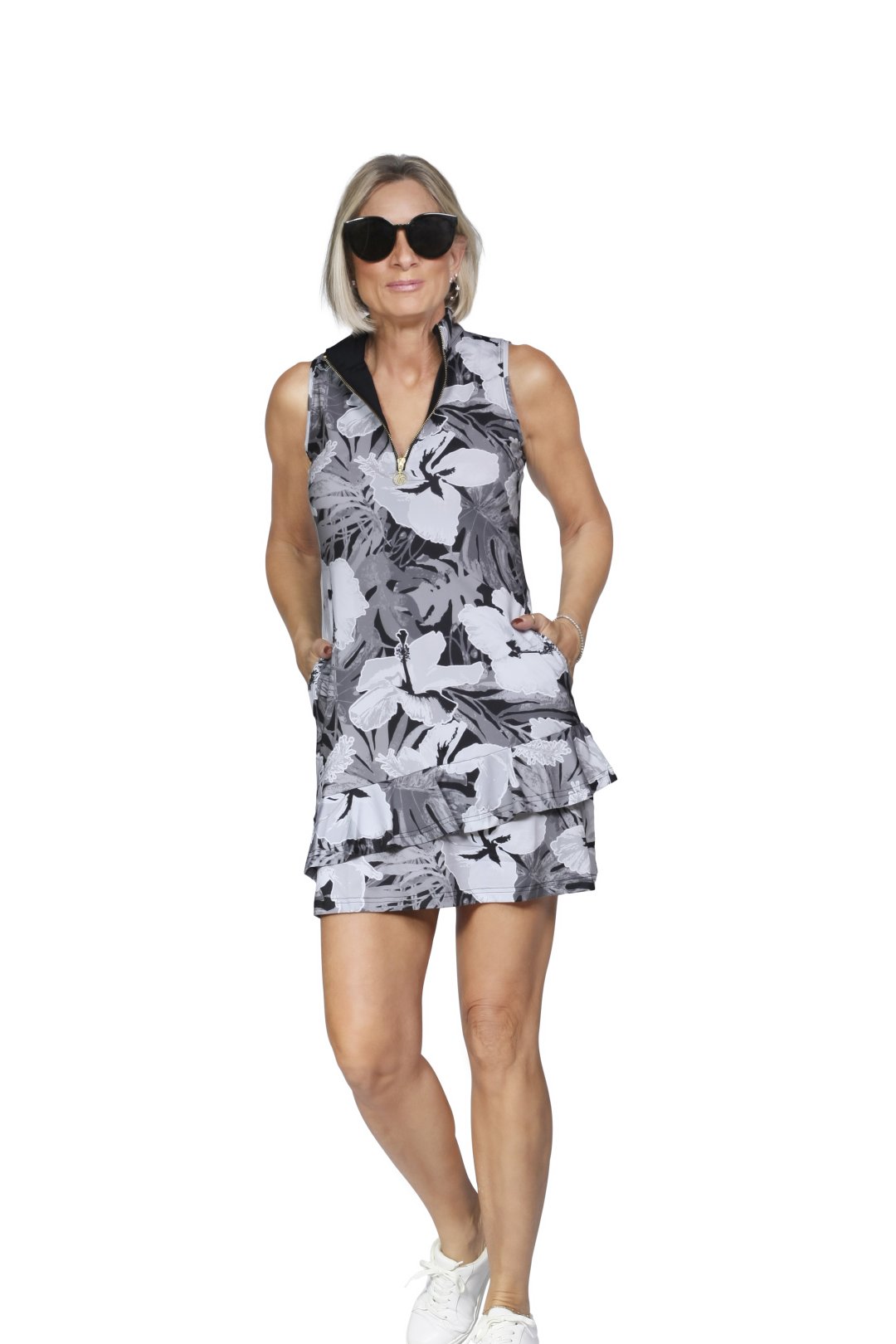
Comfort also depends on how the fabric feels against the skin. Soft knits reduce friction during repeated swings, which helps on long days.
Fit also changes how the shirt performs. A fabric that stretches to accommodate movement but returns to its original shape keeps its UPF coverage intact across the arms and torso.
Quick-Dry Women's Golf Polos and Travel Versatility
Quick-dry construction is useful beyond the course. A shirt that dries fast after a wash or a sweaty round can be packed, worn, and rewashed without much planning, which suits frequent travelers.
Our Mer Short Sleeve Polo in black works as a neutral base for travel, pairing with skorts, shorts, or trousers for dinners and sightseeing. AnaClare's apparel is designed to be wrinkle-resistant for easy packing.

Caring for UPF Golf Shirts So They Keep Protecting You
UPF protection is only useful if the fabric keeps it over time. Washing in hot water, using harsh detergents, or running the shirt through high heat can weaken fibers and reduce protection. Follow the care label on every garment.
Practical steps that help:
- Wash in cold or warm water on a gentle cycle.
- Avoid fabric softener, which can coat fibers and reduce moisture wicking.
- Air dry where possible, or use low heat.
Proper care keeps the fabric performing as intended, which is what gives you reliable sun protection season after season.
Choosing Your Next AnaClare Golf Top
If you want a comfortable, sun-protective golf shirt that also works for travel and dinner, the Mer Short Sleeve Polo is a strong starting point. It carries UPF50 protection and comes in five colors at $39.99. For more options, browse the AnaClare short sleeve tops collection.
Frequently Asked Questions
What does UPF 50 mean in a golf shirt?
UPF stands for Ultraviolet Protection Factor. A UPF 50 rating means the fabric lets through about 1/50th of the UV radiation that reaches it, so roughly 98 percent is blocked. The rating is measured on the fabric itself. Look for the UPF rating on the product page or care label. AnaClare's Mer Short Sleeve Polo, for example, carries UPF 50 protection woven into the fabric, so you do not need to rely on sunscreen for the areas it covers.
Are UPF 50 golf shirts comfortable to wear in hot weather?
They can be, provided the fabric is lightweight and breathable and the fit allows air to move. Choose moisture-wicking, quick-drying materials and avoid heavy cottons. Trying the shirt on and moving through a practice swing before you commit is the best test of comfort.
Do UPF golf shirts lose sun protection after washing?
Protection can change with wear and laundering. Repeated washing, harsh detergents, bleach, and high-heat drying can gradually weaken coverage, and stretched or thinned fabric protects less. To keep UPF performance, wash in cool water, avoid bleach and fabric softener, and air dry when possible. Following the care instructions on the label matters more than any single feature of the shirt.
Can you wear a UPF 50 golf shirt from the course to the beach?
Yes. Golf polos built for the course often transition well to beach outings and casual lunches because they are lightweight and quick to dry. Pair a short-sleeve polo with a skirt or light shorts for a relaxed look, or add a layer for dinner. Versatility depends on fit and color, so classic neutrals and clean tailoring travel best across settings.
How should a women's golf shirt fit for a full golf swing?
A golf top should allow full rotation through the shoulders and back without pulling across the bust or riding up at the waist. Check that sleeves do not restrict the arm at the top of the backswing. Stretch fabric helps, but the cut matters just as much. If the shirt pulls when you reach or twist in the fitting room, size up or choose a relaxed-fit style.
What fabric is best for a women's sun-protective golf shirt?
Check the fabric composition on the product label to see what the shirt is made from. They combine strong UV blocking with stretch, moisture-wicking, and quick drying. Smooth knit fabrics feel softer against the skin than heavier weaves. Check the fabric composition on the label and prioritize a UPF rating over fabric type alone.
Are long-sleeve golf shirts cooler than short-sleeve shirts in the sun?
Long-sleeve shirts can feel cooler in direct sun because they shield skin from UV and direct heat, but they trap more warmth in still air. A lightweight, breathable long-sleeve with UPF 50 protection often performs better than a thick short-sleeve cotton shirt. Choose long sleeves for full-day exposure on open courses and short sleeves for milder, shaded conditions.

Leave a comment