


Last Updated: October 26, 2026
Quick Summary
Easy care clothing is apparel designed to resist wrinkles, dry quickly, and survive repeated washing without special handling, which means less ironing and more carry-on room for frequent travelers. Match fabrics to your laundry plan: performance wovens and merino blends dry fast and resist odor, while cotton and linen crease badly and dry slowly.
- Performance wovens and lightweight polyester typically dry in two to four hours in a ventilated room.
- Merino and bamboo take six to ten hours to dry, while cotton can take ten to sixteen hours.
- Roll jersey, knits, and dresses, and fold wovens along existing seams to prevent wrinkles.
- Wash tops every two to three days and bottoms every four to five days on the road.
- A garment that requires dry cleaning or hand-washing is not easy care, regardless of marketing.
Table of Contents
- Why Easy Care Clothing Matters for Frequent Travelers
- Best Fabrics for Travel Clothes
- How to Pack Clothes to Prevent Wrinkles
- Building a Travel Capsule Wardrobe for Women
- How to Wash Clothes While Traveling
- Easy Care Clothing by Trip Length
- Choosing Easy Care Pieces for Your Next Trip
- Frequently Asked Questions
Why Easy Care Clothing Matters for Frequent Travelers
Easy care clothing is apparel designed to resist wrinkles, dry quickly, and survive repeated washing without special handling.
The math is simple. Every garment that needs pressing or hand-washing is a garment that costs you time on every single trip.
Below, we break down which fabrics actually perform, how to pack to minimize creasing, and how to build a travel capsule wardrobe that works for a weekend or a two-week trip.
Best Fabrics for Travel Clothes
The best fabrics for travel clothes balance five things, not four: wrinkle resistance, breathability, drying speed, odor retention, and durability. No single fiber wins on all five, so the right choice depends on your climate, your laundry access, and how many times you plan to rewear a piece between washes. The table below is a starting point; the trade-off notes underneath are what actually decide the purchase.
| Fabric | Wrinkle Resistance | Breathability | Dry Time (sink-washed, hung) | Odor Retention | Durability | Best For |
|---|---|---|---|---|---|---|
| Jersey knit (cotton blend) | High | Moderate | 4-8 hours | Moderate | Moderate | Everyday pieces, dresses |
| Performance woven (nylon/spandex) | High | Moderate | 2-4 hours | Low | High | Structured pants, travel pants |
| Polyester interlock | High | Low-moderate | 2-4 hours | Moderate-high | High | Activewear, layering |
| Merino wool knit | Moderate-high | High | 6-10 hours | Very low | Moderate | Cool climates, multi-day rewear |
| Bamboo viscose | Moderate | High | 6-10 hours | Moderate | Low-moderate | Hot climates, soft against skin |
| Cotton | Low | High | 10-16 hours | Moderate | Moderate | Short trips with laundry access |
| Linen | Low | Very high | 3-6 hours | Low | Moderate | Beach trips, casual wear |
Wrinkle resistance vs. breathability. The fabrics that resist creasing best, performance wovens and polyester interlocks, are also the least breathable in still, humid heat.
Drying speed vs. durability. Very thin, fast-drying fabrics (lightweight polyester, thin jersey) dry in two to four hours but pill and thin out after repeated washing. Heavier knits and wovens last longer but need a full overnight to dry. For trips where you wash every three to four days, a mid-weight performance woven is the safer bet; for trips where you wash nightly, lighter fabrics earn their place.
Odor retention. This is the variable most packing lists ignore.
Stretch and recovery. Natural stretch in a knit (the way jersey bounces back) signals better long-term recovery than a garment that relies entirely on elastane.
Watch out: cotton and linen feel wonderful in heat but crease badly in a suitcase and dry slowly in a hotel sink. If you pack them, plan around laundry access and accept that they will look rumpled by day two.
For a concrete example, our Tali Pant has a wide comfort waistband and a soft, legging-like feel.

How to Pack Clothes to Prevent Wrinkles
Packing to prevent wrinkles comes down to three techniques: roll soft fabrics, fold structured pieces along their seams, and fill gaps so nothing shifts in transit. Compression and movement cause most creases, not the fabric itself.
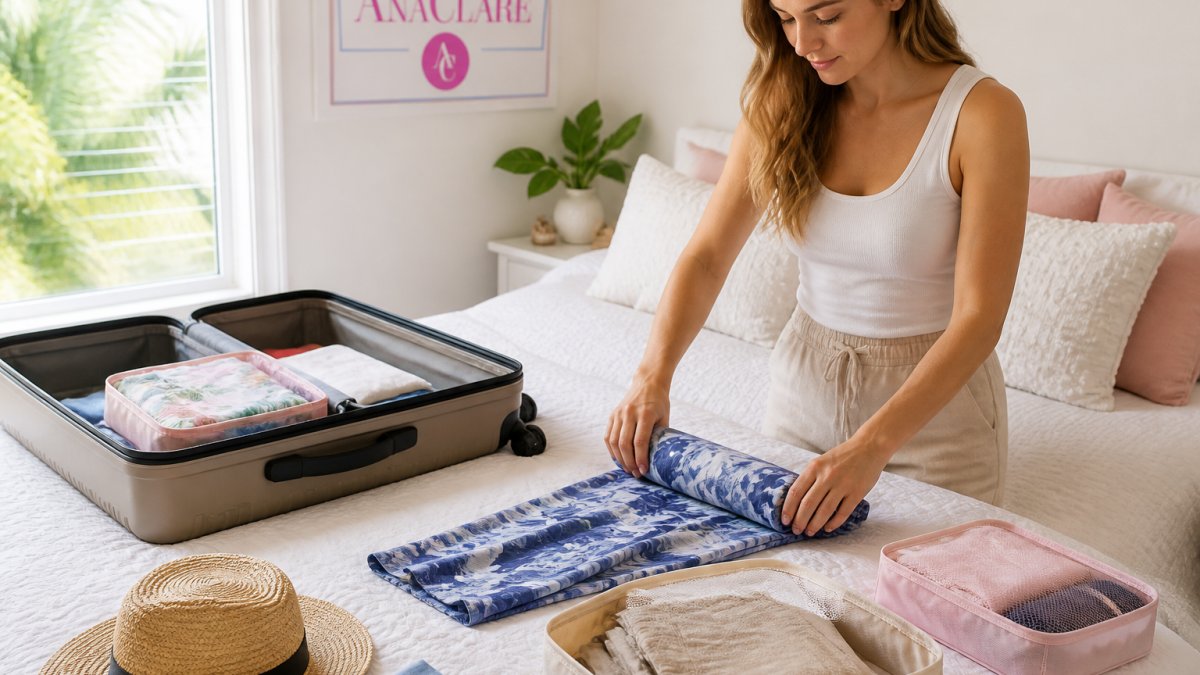
A packing routine that works:
- Roll jersey, knits, and dresses. Rolling eliminates hard fold lines and saves space.
- Fold wovens along existing seams. Match the fold to the garment's construction so the crease falls where a crease already exists.
- Use packing cubes by category. Cubes compress contents and stop items from sliding.
- Pack heavy items at the wheel end. This keeps the bag balanced and reduces compression on lighter pieces.
- Leave a little slack. An overstuffed bag creases everything inside it.
Hang anything that arrives creased in a steamy bathroom for ten minutes. Most performance fabrics relax on their own.
Building a Travel Capsule Wardrobe for Women
A travel capsule wardrobe for women is a small set of mix-and-match pieces in a coordinated color palette that covers every activity on the trip.
Start with a neutral base, then add two or three pieces that carry the visual interest. For a warm-weather trip, that might mean:
- Two pairs of travel pants in neutral tones
- One wide-leg or relaxed pant for evenings
- Three versatile tees or ribbed tanks
Every piece should work with at least three others. If it doesn't, it stays home.
A versatile sport dress can earn its place in a capsule. Our Loren Sport Dress has pockets and a sporty zip.

How to Wash Clothes While Traveling
Washing clothes while traveling is easiest with a sink, a travel-sized detergent sheet or gentle liquid, and fabrics that dry overnight. The routine takes about ten minutes and eliminates the need to overpack. But the difference between a wash that works and one that leaves you with damp clothes at checkout is in the details: water temperature, detergent choice, how you remove water, and where you hang things.
The sink-wash routine
- Fill a clean sink with cool water, roughly 1 gallon, and add a small amount of gentle detergent. A travel detergent sheet or a teaspoon of liquid is enough for two to three garments. More detergent means more rinsing and slower drying.
- Submerge garments for five to ten minutes, agitating gently with your hand. Do not scrub performance fabrics; friction breaks down the finish and any built-in sun protection.
- Rinse thoroughly until the water runs clear. Residual detergent holds moisture and can leave a stiff hand-feel.
- Roll each piece in a dry towel to press out excess water. Do not wring. Wringing stretches knits and creases wovens. A bath towel absorbs most of the water in about a minute per garment.
- Hang or lay flat in a ventilated area overnight. Hang knits on a padded hanger or lay flat to avoid shoulder stretch. Hang wovens and dresses from the hem or waistband so water drains down.
Drying times by fabric
Performance wovens and lightweight polyester typically dry in two to four hours in a ventilated room. Jersey knits take four to eight hours. Merino and bamboo take six to ten hours. Cotton can take ten to sixteen hours and may still be damp at the seams. If you are washing at night and checking out in the morning, cotton is the wrong choice; performance wovens and merino are the right ones.
Detergent choices
Detergent sheets are the most travel-friendly option: no liquid limits at security, no leaks, and pre-measured doses. Gentle liquid detergent in a travel bottle works too, but check the TSA 3-1-1 rule, containers must be 3.4 ounces or less and fit in a quart-sized bag. Avoid fabric softener entirely; it coats performance fabrics and reduces breathability and wicking. For sun-protective pieces, skip detergents with optical brighteners, which can degrade the finish over time.
Planning outfits around laundry days
Frequent travelers do not wash everything at once. A common pattern is to wash tops and undergarments every two to three days and bottoms every four to five days, since bottoms contact less skin and hold less odor. Build your packing list around that rhythm: three or four quick-drying tops, two bottoms, and one dress cover a week with one mid-trip wash.
Easy Care Clothing by Trip Length
The right wardrobe changes with trip length. A weekend trip needs less redundancy; a two-week trip needs pieces that survive repeat wear and regular washing.
Weekend trips (2-3 days): Pack two bottoms, three tops, and one dress. No laundry required. Choose wrinkle-resistant fabrics so everything arrives ready to wear.
One-week trips (5-7 days): Pack three bottoms, four tops, one dress, and one layer. Plan one laundry session mid-trip. Quick-drying fabrics make sink washing practical.
Extended trips (10+ days): Pack four bottoms, five tops, two dresses, and two layers. Laundry every three to four days. Prioritize easy-care fabric and pieces that work across settings, since variety matters more on longer trips. A versatile option is the Emilee Solid Long Shift Dress.
Choosing Easy Care Pieces for Your Next Trip
Choosing easy care pieces starts with the care label, not the price tag.
Read for three things: the fiber content, the wash instructions, and the construction. Reinforced seams and quality closures last longer through repeated washing. Natural stretch in a knit signals better recovery than a garment that relies on elastane alone.
A common mistake is buying "travel clothing" that only works for one type of trip. Our Briley Solid Half Zip Pullover offers UPF 50 sun protection.
For frequent travelers, cost per wear matters more than sticker price. A piece you wear forty times a year beats a cheaper piece you wear twice.
Frequently Asked Questions
What is the best fabric for wrinkle-free travel?
Wrinkle-resistant fabrics for travel include bamboo viscose, jersey knits, and woven blends with a small amount of stretch. Bamboo viscose resists creasing and feels soft against the skin, while jersey knits drape well and pack flat. Woven fabrics with stretch hold their shape through long flights and can be hung to release minor wrinkles. Avoid pure cotton and linen if you want to skip ironing, since both crease easily. Look for care labels that allow machine washing and tumble drying to keep your routine simple.
How do you wash and dry clothes while traveling?
Pack a small bottle of travel detergent and wash clothes in a hotel sink or nearby laundromat. Fill the sink with cool water, add a capful of detergent, and let items soak for 10 to 15 minutes. Rinse thoroughly, then roll the garment in a towel to remove excess water. Hang it on a hanger or over a chair to dry. Quick-drying fabrics like bamboo viscose and lightweight knits are usually dry by morning. For longer trips, plan one laundry session every four to five days to keep your wardrobe fresh.
What is the 5-4-3-2-1 rule for packing?
The 5-4-3-2-1 packing rule is a simple framework for building a travel capsule wardrobe. Pack five tops, four bottoms, three dresses or outer layers, two pairs of shoes, and one swimsuit or accessory set. This combination creates enough mix-and-match outfits for a week or more without overpacking. Choose easy care clothing in neutral colors and wrinkle-resistant fabrics so each piece works with the others. The rule works best when every top coordinates with every bottom, which cuts decision-making on the road.
How can I build a travel wardrobe with fewer pieces?
Start with a color palette of two or three neutrals, then add pieces that mix and match. Choose wrinkle-resistant fabrics like bamboo viscose, jersey, and stretch wovens so you can rewear items without ironing. Include versatile pieces such as a maxi dress that works for dinner, wide-leg pants for travel days, and a half-zip pullover for layering. Aim for a travel capsule wardrobe for women that covers at least five days of outfits from seven to ten items. Wash items mid-trip to extend the rotation.
What clothes should I pack for a 10-day trip?
For a 10-day trip, pack a travel capsule wardrobe of about 10 to 12 pieces, including three to four tops, three bottoms, two dresses, one lightweight jacket, and two pairs of shoes. Choose easy care clothing in wrinkle-resistant, quick-drying fabrics so you can wash and rewear items. Plan one laundry session around day five to refresh your wardrobe. Include versatile pieces like a maxi dress, relaxed pants, and a layering top that transition from day to night. Roll clothes to save space and reduce creasing.
How do you keep clothes from wrinkling in a suitcase?
Roll clothes instead of folding them flat, which reduces creases and saves space. Place heavier items at the bottom of the suitcase and lighter, wrinkle-prone pieces on top. Use packing cubes to keep garments compact and limit movement. For dresses and button-downs, fold along the seams and smooth the fabric before packing. Choose wrinkle-resistant fabrics like bamboo viscose and jersey knits to minimize creasing. When you arrive, hang items in the bathroom while you shower so steam releases minor wrinkles.
Packing light only works when every piece earns its place. AnaClare builds resort and activewear around wrinkle-resistant fabrics, built-in UPF 50+ sun protection, and original tropical prints designed to move from the course to the beach to dinner. Explore the collection and pack a bag that works as hard as you do.

Leave a comment