


Last Updated: October 25, 2026
Quick Summary
Wash UPF 50 clothing in cold water on a gentle cycle, turn garments inside out, and skip harsh detergents, bleach, and fabric softener. Air dry in shade or tumble dry low, since heat and rough tumbling wear down the tight weave that blocks UV radiation.
- UPF 50 clothing blocks at least 98% of UV radiation, and that rating depends on tight fabric construction.
- Check the care label first; when the label and general advice disagree, the label wins.
- Rinse swimwear and golf pieces in cool water right after wear, before sweat, sunscreen, or chlorine residue sets.
- Use a mild, liquid, dye-free detergent without whiteners or softeners, and avoid using too much.
- Replace UPF clothing when the fabric thins, stretches out, or turns sheer in bright light.
Table of Contents
- Why Washing Matters for UPF 50 Clothing
- UPF Clothing Washing Instructions: A Step-by-Step Routine
- The Best Detergent for UPF Clothing (and What to Avoid)
- How to Dry UPF Clothing Without Damaging the Fabric
- How Many Washes Can UPF 50 Clothing Withstand?
- UPF Clothing Lifespan: Signs It's Time to Replace a Garment
- Shop AnaClare UPF 50 Pieces Built for Easy Care
- Frequently Asked Questions
Why Washing Matters for UPF 50 Clothing
How to wash UPF 50 clothing without stripping its sun protection comes down to one principle: treat the fabric gently and skip the harsh chemistry.
Three things wear protection down:
- Hot water that relaxes fibers and loosens the weave
- Harsh detergents that break down finishes and fibers
- Rough tumbling that stretches and abrades fabric
Stretching matters more than most people realize. A garment pulled out of shape lets more UV through.
The good news: routine laundering done right can actually help. For a deeper look at how sun-protective garments are built, see our guide to women's golf shirts with sun protection.
UPF Clothing Washing Instructions: A Step-by-Step Routine
Here is the routine we recommend for any UPF 50 garment, from sorting through drying. It takes about five minutes of hands-on work and works for nylon, polyester, spandex blends, and cotton-blend sun shirts alike.
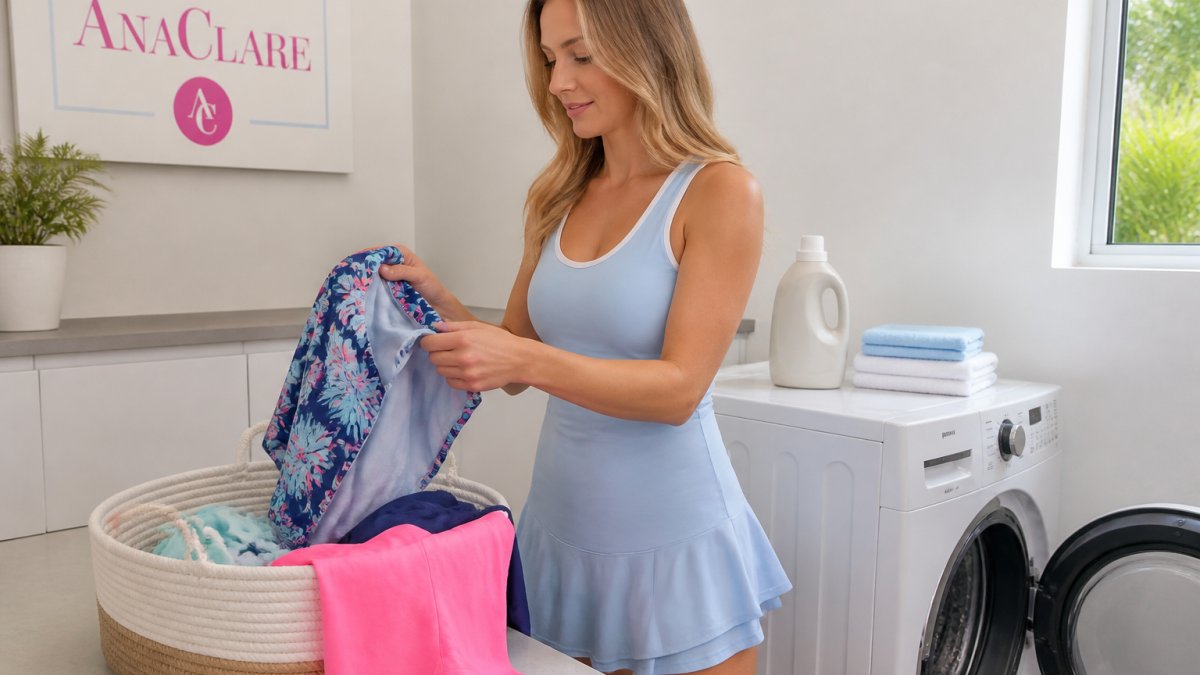
Step 1: Check the Care Label First, and Resolve Conflicts
Read the manufacturer's care instructions before anything else. The label tells you the fiber content, the wash temperature, and whether tumble drying is allowed. When the label and general advice disagree, the label wins.
Common label terms and what they mean:
- Machine wash cold: water under 30°C/86°F
- Gentle cycle: low agitation, slow spin
- Tumble dry low: lowest heat setting only
- Line dry: no machine drying at all
If the label says hand wash, hand wash. No shortcut is worth losing the protection you paid for. If the label is missing or unreadable, default to cold water, gentle cycle, mild liquid detergent, and line drying in shade, the most conservative combination.
Step 2: Sort by Fabric and Construction
Sort sun-protective pieces by fiber and by how they are built, not just by color:
- Woven nylon and polyester shells (typical sun shirts and sport dresses): cold gentle cycle, inside out, low spin.
- Knits and spandex blends (golf polos, leggings, swim tops): wash with like knits, avoid overloading, and never wring.
- Coated, laminated, or membrane fabrics: follow the label exactly; some allow only hand washing and drip drying.
- Cotton and cotton-blend pieces: more tolerant of warm water but still prone to shrinkage and weave loosening at high heat.
Wash UPF garments separately from heavy items like jeans, towels, and items with zippers or hook-and-loop closures that abrade fabric in the drum.
Step 3: Pre-Treat Sweat, Sunscreen, and Chlorine Residue
Sunscreen, sweat, salt water, and chlorine all leave residue that can dull fabric and weaken fibers over time. Rinse swimwear and golf pieces in cool water right after wear, before residue sets.
For stains, apply a small amount of mild liquid detergent directly to the spot. Let it sit for a few minutes, then wash as normal. For sunscreen and oily residue, a short soak in cool water with a teaspoon of mild detergent helps lift the film.
Step 4: Wash on a Gentle Cycle in Cold Water
Use cold water and the gentle or delicate cycle. Turn garments inside out to reduce surface abrasion. Wash similar colors together and avoid overloading the drum, since crowding causes extra friction.
Skip the spin cycle on high. A slow spin removes enough water without stretching the weave. If your machine has a hand-wash or soak cycle, it is a good substitute for delicate knits.
Step 5: Dry Low and Slow
Air drying is the safest finish. Line dry in shade or flat dry on a rack; heat is the enemy of elastic fibers and tight weaves. If the label allows tumble drying, use the lowest heat setting and remove the garment while slightly damp. Never tumble dry high, and never dry clean a UPF garment unless the label explicitly permits it, dry-cleaning solvents can affect finishes and elasticity.
Here is the full wash routine, from reading the label to drying, in the order we recommend it.
| Step | What to do | Key detail |
|---|---|---|
| 1 | Check the care label first | Label wins over general advice |
| 2 | Sort by fabric and construction | Keep away from jeans, towels, zippers |
| 3 | Pre-treat sweat, sunscreen, chlorine | Rinse in cool water right after wear |
| 4 | Wash cold on gentle cycle | Turn inside out, skip high spin |
| 5 | Dry low and slow | Line dry in shade is safest |
The Best Detergent for UPF Clothing (and What to Avoid)
The best detergent for UPF clothing is a mild, liquid, dye-free formula with no added whiteners or softeners. Simple beats fancy here. The goal is to lift sweat, oil, and residue without coating fibers or breaking down the weave that provides UV blocking.
Detergent Types, Ranked
- Mild liquid, dye-free, free of softener: best default for nylon, polyester, and spandex blends.
- Sport-wash or technical-fabric liquid detergent: good for synthetic knits and swimwear; choose a version without softener or brighteners.
- Standard liquid detergent: acceptable in small amounts if it has no whiteners or softeners.
- Powder detergent: can clump in cold cycles and leave residue; use only if it dissolves fully.
- Laundry pods: workable if dye-free and softener-free, but confirm the pod dissolves fully in cold water before adding clothes.
What to Avoid and Why
- Chlorine bleach: damages fibers and any finish; it can also yellow white synthetics over time. Oxygen bleach is gentler but still only if the care label permits it.
- Fabric softener: coats fibers with a waxy film that can reduce breathability and interfere with moisture-wicking finishes. Skip it entirely, including softener-containing pods and dryer sheets.
- Detergents with UV-absorbing brighteners: these are additives, not built-in protection, and they wash out. They do not restore a garment's UPF rating.
- Harsh stain removers: solvent-based or enzyme-heavy removers can attack coatings and elastic. Test on a hidden seam first, and prefer oxygen-based products when the label allows.
How Much Detergent to Use
A common mistake is using too much detergent. Excess soap leaves residue that traps dirt and dulls the fabric. Use the amount on the label for your load size, not a generous pour. For a small load of technical pieces, half the recommended dose is often enough.
When the Label and the Bottle Disagree
The care label is the manufacturer's tested guidance for that specific fabric and construction. If a detergent bottle says it is safe for all fabrics but the label forbids softener or bleach, follow the label. When in doubt, choose the mildest product and the coolest water setting.
How to Dry UPF Clothing Without Damaging the Fabric
Air drying is the safest way to dry UPF clothing. Heat is the enemy of elastic fibers and tight weaves, so low and slow wins every time.
Your drying options, ranked:
- Line dry in shade: best overall, protects fabric and color
- Flat dry on a rack: good for knits and heavier pieces
- Tumble dry low: acceptable if the label allows it
- Tumble dry high: avoid, since heat stresses fibers and stretch
Direct sun exposure during drying can fade prints over time. If you are packing for a trip and want pieces that survive careful drying and still look crisp, our guide to wrinkle-resistant travel clothing covers fabrics that hold up.
How Many Washes Can UPF 50 Clothing Withstand?
Most well-made UPF 50 garments keep their rating through dozens of gentle wash cycles. The exact number depends on the fabric, the construction, and how you wash it. There is no universal wash count that applies to every garment.
What we can say with confidence:
- Gentle washing in cold water preserves protection far longer than hot water and harsh detergent
- Tightly woven fabrics hold their UV blocking ability better than loose knits
- Stretched or worn-thin fabric loses protection faster than intact fabric
Treat the care label as the manufacturer's tested guidance. If a brand publishes wash-durability claims, ask to see the testing behind them.
UPF Clothing Lifespan: Signs It's Time to Replace a Garment
Replace UPF clothing when the fabric thins, stretches out, or turns sheer in bright light. Those are the clearest signals that UV transmission has likely increased.
Watch for these signs:
- Fabric looks visibly thinner at stress points like shoulders and knees
- Holding the garment up to a lamp shows light passing through
- Elastic has gone slack and the fit has loosened
- Pilling or abrasion has worn the surface
- The care label is gone and you can no longer confirm the rating
None of these guarantee the protection is gone, but they are good reasons to retire the piece. If you are planning to replace worn pieces before a beach trip, our guide to packing light for beach vacations helps you build a smaller, smarter travel wardrobe.
Shop AnaClare UPF 50 Pieces Built for Easy Care
Our Loren Sport Dress is the piece we point customers to when they ask how to wash UPF 50 clothing without fuss. It is machine-washable, wrinkle-resistant, and rated UPF 50, so it moves from the golf course to dinner without special handling.
The dress comes in four prints, each $89:
- Loren Sport Dress Skipper: sporty zip, pockets, flirty ruffle
- Loren Sport Dress Tidal: same easy-care build in a cooler palette
- Loren Sport Dress Selena and Harvee: two more signature prints
Every piece is sleeveless with pockets for essentials, and the fabric holds its shape through repeated gentle washes.


Frequently Asked Questions
Can you put UPF 50 clothing in the washing machine?
Yes, most UPF 50 clothing can go in a washing machine. Use a gentle or delicate cycle with cold water and a mild liquid detergent. Turn the garment inside out and skip fabric softener, bleach, and dryer sheets, which can break down the fabric treatment or coating that provides UV protection. Always check the care label first, since swimwear and technical outdoor fabrics may have specific instructions.
Does washing UPF clothing reduce its sun protection?
Regular washing does not automatically reduce UPF protection, and in some cases it can help. Research on UPF-rated fabrics shows that gentle laundering in cold water with commercial detergent can maintain or even slightly improve UV blocking by tightening the fabric weave. The bigger risks come from harsh chemicals, high heat, and excessive stretching or abrasion over time.
Should UPF clothing be air-dried or put in the dryer?
Air drying is the safest choice for how to dry UPF clothing. Hang or lay the garment flat in the shade, since prolonged direct sun exposure can degrade some fabrics. If you use a dryer, choose the lowest heat setting and remove the item while slightly damp. High heat can shrink fibers, loosen the weave, and reduce UV blocking performance over many cycles.
How often should you wash UPF 50 clothing?
Wash UPF 50 clothing after every one to three wears, depending on activity. Rinse swimwear and golf pieces immediately after contact with chlorine, salt water, or heavy sweat to prevent residue buildup. Sunscreen, body oils, and perspiration can clog the fabric and reduce breathability, so a regular gentle wash cycle keeps the garment performing and extends its UPF clothing lifespan.
Washing sun-protective clothing should not feel like a chore with a rulebook. Cold water, mild detergent, and air drying handle almost every UPF 50 garment you own. AnaClare designs UPF 50+ protection into the fabric, adds wrinkle-resistant convenience, and finishes each piece with original tropical prints, so your wardrobe works as hard as you do. Get started with AnaClare and build a travel-ready rotation you can wash without worry.

Leave a comment