


Last Updated: November 15, 2026
Quick Summary
Resort wear prices are driven by four costs that compound: fabric, construction, labor, and brand overhead. Fabric sets the price floor, construction and labor raise it, and brand equity adds a premium that has nothing to do with the garment itself. Pay for the first two, which you can verify by hand, and treat the third as a bonus.
- Fabric sets the price floor, so read the fiber content tag first.
- French seams cost more because they require two stitching passes.
- Stitch density is the fastest objective test you can run in a fitting room.
- Cost per wear is price plus maintenance minus resale, divided by wears.
- Halve your first wear estimate for bold prints and double it for solid neutrals.
Table of Contents
- What Actually Drives Resort Wear Prices
- Resort Wear Fabrics That Earn Their Cost
- How to Judge Resort Wear Quality Before You Buy
- UPF 50+ Clothing and the Cost of Built-In Sun Protection
- Cost Per Wear and the Case for Investment Pieces
- How to Look Expensive on Vacation Without Overspending
- Where to Find Resort Wear Built to Justify Its Price
- Frequently Asked Questions
What Actually Drives Resort Wear Prices
A $40 dress and a $240 dress can look nearly identical on a hanger. You can see how add-on pricing works on the site's own products by reviewing the Additional Price details.
Here's the core idea: resort wear prices are driven by four costs that compound, fabric, construction, labor, and brand overhead. Fabric sets the floor. Construction and labor raise it. Brand equity adds a premium that has nothing to do with the garment itself.
Most shoppers assume the label explains the price. Usually, it doesn't.
So how do you tell the difference between real value and a marked-up tag? You learn to read the garment.
| Cost Driver | What It Adds | How to Spot It |
|---|---|---|
| Fabric | Sets the price floor | Read the fiber content tag |
| Construction | Raises durability | Inspect seams and hems |
| Labor | Reflects skill and ethics | Check stitching consistency |
| Brand equity | Adds markup | Compare similar pieces side by side |
A quick way to think about it: fabric and construction are things you can verify with your hands. Brand equity is a story.
Resort Wear Fabrics That Earn Their Cost
Resort wear fabrics decide how a garment feels, packs, and lasts. Natural fibers like cotton, linen, and silk usually cost more because they breathe well and age gracefully.
The fiber content tag tells you most of what you need. A high-quality resort piece often lists a natural fiber first. Blends aren't automatically bad, though.
Federal Trade Commission textile labeling rules require brands to disclose fiber content and country of origin, so you always have a starting point. Use it.
Natural Fibers vs. Synthetic Blends
Natural fibers win on breathability and comfort in heat. Synthetic blends win on wrinkle resistance and quick drying. The best resort wear often mixes both on purpose.
- Linen: breathes beautifully, wrinkles easily, softens with wear
- Cotton: comfortable and easy to care for, can shrink if untreated
- Silk: light and cool, needs gentle handling
- Modal and viscose: drape well, come from plant pulp
- Polyester blends: resist wrinkles, dry fast, can feel warm
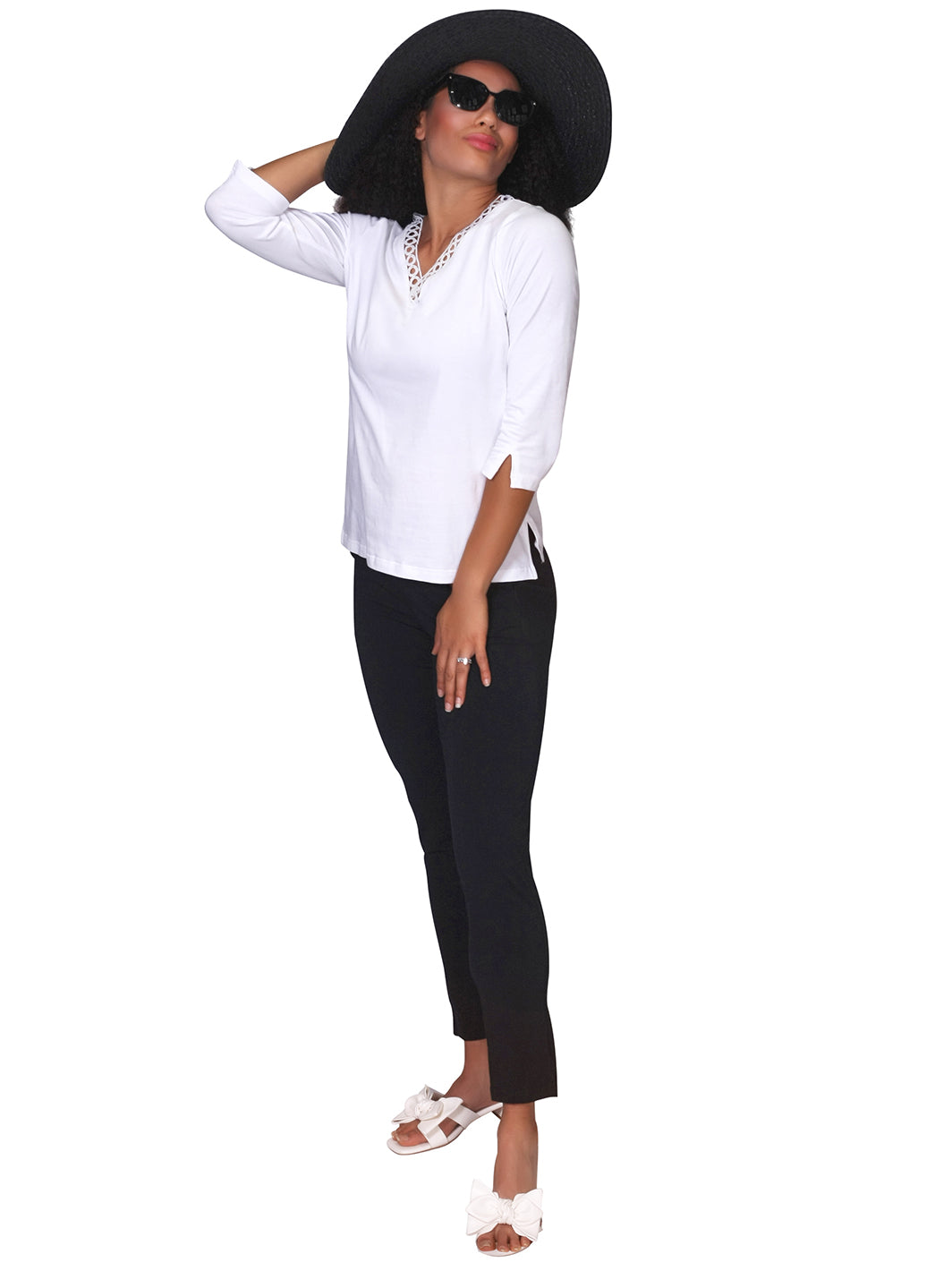
You can see how a quality natural fiber performs in a piece like the Tali Solid Pant, which is built around the fabric conversation above.
How to Judge Resort Wear Quality Before You Buy
Resort wear quality comes down to construction you can inspect in under a minute. Turn the garment inside out, check the seams, and look for even stitching. Good construction means the piece will survive repeated washing and packing. But "good stitching" is vague, so here is what to actually measure.
Stitch Density and Seam Types
Stitch density is the number of stitches per inch, and it's the fastest objective test you can run. You can count them with a fingernail or a phone camera zoom.
Seam type matters just as much. A plain seam is the cheapest and most common. A French seam encloses the raw edge inside a folded pocket of fabric, so it won't fray and looks clean on an unlined garment, it costs more because it requires two stitching passes.
Fabric Weight and Performance
Fabric weight is measured in grams per square meter (GSM), and it tells you how a piece will behave in heat and in a suitcase. A very light fabric packs small but can be sheer and fragile; a heavier one drapes better and resists wrinkles but takes up more room.
This is where technical fabric performance separates resort wear from everyday clothing. A fabric engineered for travel may combine breathability, quick drying, and wrinkle resistance in one cloth, which costs more to develop and produce than a standard cotton or polyester.
The One-Minute Inspection Checklist
Here's a fast quality checklist you can run in a fitting room:
- Seams lie flat with no puckering or loose threads
- Stitching is tight and even along hems and armholes
- Stitch density is high enough that you can't easily see gaps between stitches
- Buttons and zippers feel secure, not flimsy
- Fabric feels substantial, not thin or scratchy
- Lining sits smooth and doesn't bunch
- Pattern matches at the seams
- Raw edges are enclosed, not just serged and left exposed
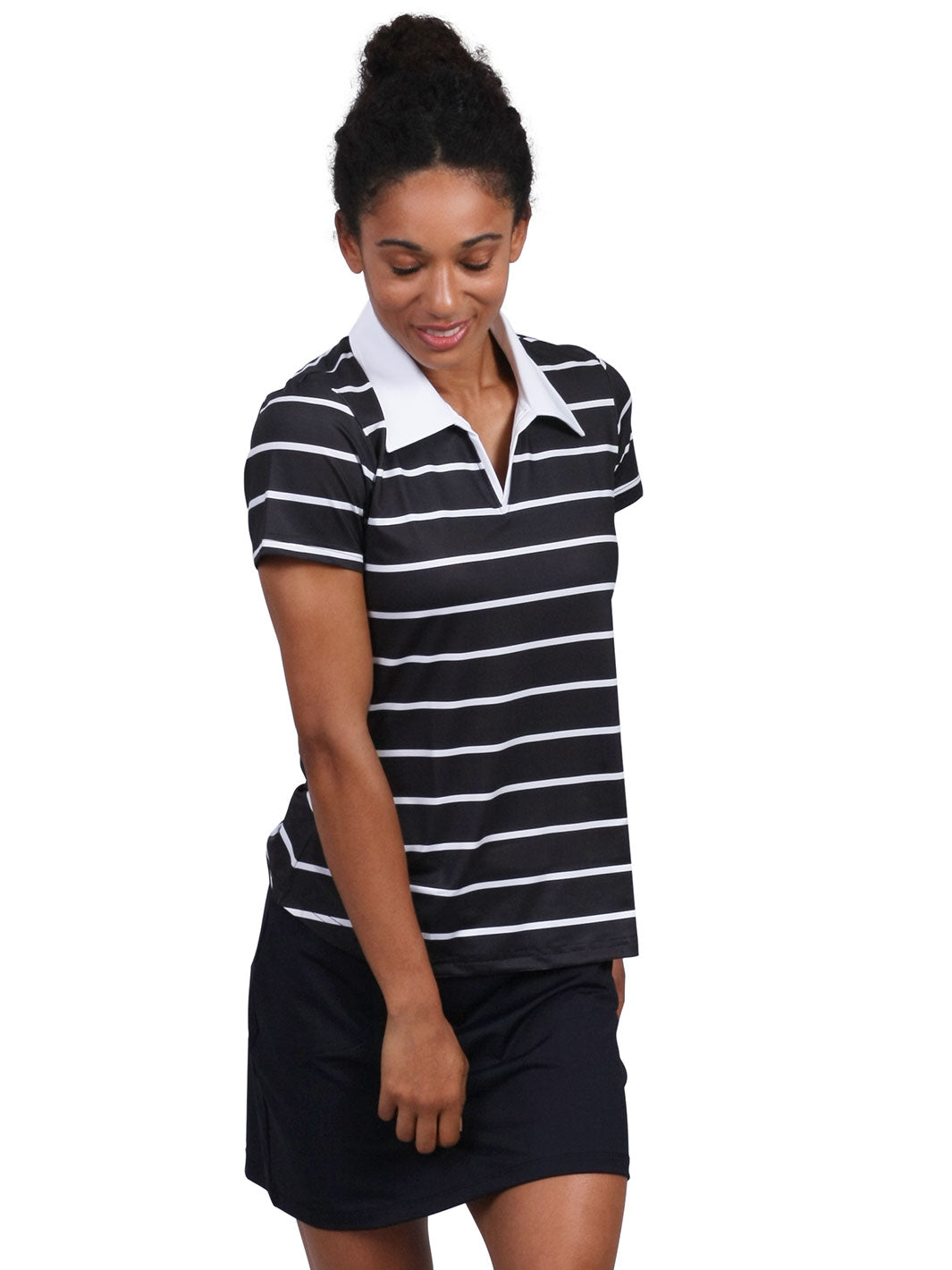
A common mistake is judging a garment by the outside only. The inside tells the real story. Run your finger along the seam: if it feels rough or uneven, walk away. You can study construction up close on a garment like the Logan Skort Black and see how the seams and stitching hold up to inspection.
Watch out: a high price tag does not guarantee high stitch density or French seams. Some expensive pieces rely on brand equity rather than construction, so inspect the garment itself before you trust the label.
UPF 50+ Clothing and the Cost of Built-In Sun Protection
UPF 50+ clothing blocks most of the sun's UV rays, and built-in sun protection is a feature some resort wear includes.
The key question is durability. Does the protection survive washing? Look for brands that state their UPF rating is woven into the fabric. U.S. Food and Drug Administration guidance on sun-protective products explains how UV protection claims are regulated, so you know what a label can and can't promise.
At AnaClare, our UPF 50+ protection is woven into the fabric, so it's built into the garment itself.
Cost Per Wear and the Case for Investment Pieces
Cost per wear is the price of a garment divided by the number of times you wear it, and it's the single best way to judge whether an expensive piece is worth it. A dress you wear thirty times often costs less per wear than a cheap one you wear twice. But the bare formula hides the costs that actually decide the answer, so treat it as a starting point, not a verdict.
Here's how to run the math yourself:
- Note the full price of the garment, including tax and any alterations
- Estimate how many times you'll realistically wear it per season, then multiply by the seasons you expect to keep it
- Add estimated maintenance costs (dry cleaning, repairs, replacement buttons or zippers)
- Subtract any expected resale value if you plan to sell
- Divide the adjusted total by the total wear count
- Compare that number across your options
A Working Cost-Per-Wear Calculator
You can build a simple calculator in any spreadsheet in under five minutes. Set up five columns: Item, Price, Estimated Wears, Maintenance Cost, and Resale Value. In a sixth column, enter this formula: (Price + Maintenance Cost − Resale Value) ÷ Estimated Wears. Sort the results from lowest to highest. The pieces at the top of the list are your real investment pieces; the ones at the bottom are the impulse buys the tag disguised.
People overestimate how often they'll reach for a statement piece and underestimate how often they'll wear a neutral staple. A common pattern is to halve your first wear estimate for anything with a bold print or an unusual cut, and to double it for solid neutrals you can wear to dinner, the beach, and the airport.
Watch out: cost per wear flatters any garment if you inflate the wear count. Use your actual calendar from last season, not your intentions for next season, to set the number.
When the Math Fails
Cost per wear breaks down in three situations. First, when the garment needs specialized care you won't actually do, a hand-wash-only linen piece that sits in the closet because you're afraid to clean it has a wear count near zero. Second, when the fit is wrong: an expensive piece that doesn't quite fit gets worn once and then lives in the back of the drawer, and no resale value recovers that. Third, when the trend cycle is shorter than your payback period.
The cost per wear argument is strongest for pieces you'll wear across multiple seasons and multiple settings. A timeless design you reach for again and again beats a seasonal trend you wear once. That's why the calculation rewards versatility as much as quality, a garment that works for the golf course, the beach, and dinner gets three times the wear count of a single-purpose piece at the same price.
How to Look Expensive on Vacation Without Overspending
Looking expensive on vacation is about fit, fabric, and restraint, not a big price tag. A few well-chosen pieces styled with intention read as luxury even when they cost far less.
Start with a small capsule wardrobe of neutral, versatile pieces. Add one statement item. Keep the fit tailored and the colors coordinated. Sophistication comes from looking put-together, not from logos.
A few practical moves:
- Choose solid neutrals that mix with everything
- Pick one or two standout prints, not five
- Make sure hems and sleeves fit your frame
- Iron or steam before you pack
- Accessorize with one strong piece, not three
If you want the look without the full spend, an Anaclare Gift Card lets you or someone else build a wardrobe over time instead of all at once.
Where to Find Resort Wear Built to Justify Its Price
Resort wear that justifies its price is the kind you can inspect, wear often, and keep for years.
At AnaClare, we design around exactly those priorities. Our pieces use high-performance fabrics with UPF 50+ protection woven in, plus wrinkle-resistant convenience for packing light.
A piece like the Emilee Solid Long Shift Dress shows what an investment-worthy garment looks like in practice: a timeless cut, quality fabric, and versatility that earns its place in your suitcase trip after trip.
The real test of any pricey resort piece is simple.
The smartest way to spend on resort wear is to buy pieces that work hard across many trips.
Frequently Asked Questions
Why is resort wear so expensive?
Resort wear prices can reflect a few factors, including fabrics that resist wrinkles and hold color in heat, and construction meant to hold up to repeated washing and packing. Built-in features like UPF 50+ sun protection add testing and material costs. Brand markup plays a part too, so compare what a piece actually delivers, fabric weight, seam quality, care requirements, against what it costs rather than assuming a higher price always means better quality.
Does UPF 50+ clothing justify a higher price?
It can, if the protection is woven into the fabric rather than applied as a coating that washes out. UPF 50+ clothing blocks most UV radiation, which matters for golf, beach days and long outdoor hours. Ask whether the brand tests its fabric and whether protection holds after repeated washing. For women who spend whole days outside, a garment that replaces reapplying sunscreen has real practical value that factors into resort wear prices.
How can you tell if resort wear is well made?
Turn the garment inside out. Check that seams are finished, not raw or fraying, and that stitching is tight and even. Look at fabric composition on the label: natural fibers and quality blends drape better and breathe in heat. Pull gently on a seam to see if it holds. Check whether prints align at the seams and whether buttons and zippers feel secure. These checks tell you more about resort wear quality than the hangtag does.
Is expensive resort wear worth the price?
Run the cost-per-wear math. A versatile piece you wear on every trip for several seasons often costs less per outing than a cheap dress you wear twice before it pills or fades. Worth it also depends on fit and versatility: pieces that move from the golf course to dinner reduce how much you pack. Compare resort wear prices against how many times you will realistically wear the item, and factor in care and repair needs over its life.

Leave a comment